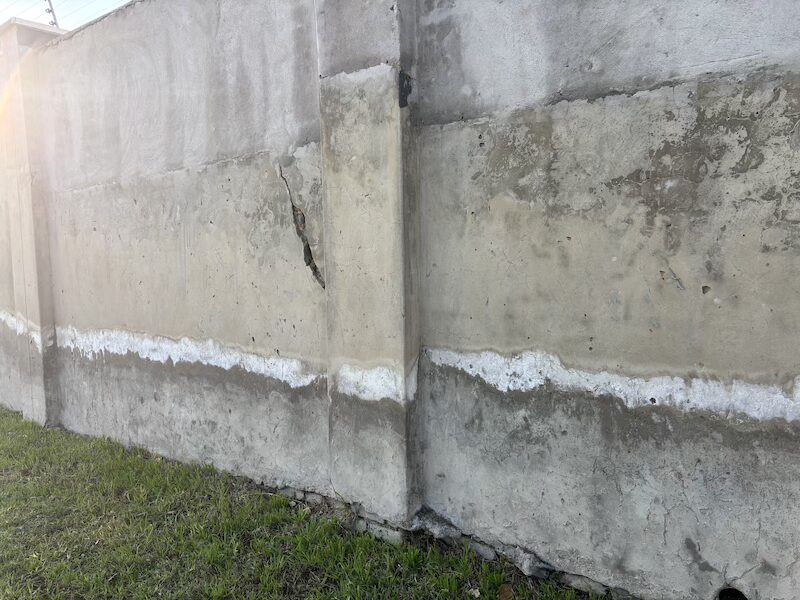
One of the most telling signs of rising damp is what’s known as a tide line. Recently, while inspecting a property, we came across a boundary wall displaying one of the clearest examples we’ve seen. The wall had been left exposed, revealing distinct horizontal layers where moisture had gradually travelled upwards over time.
While many walls are painted or plastered, hiding these signs from view, this wall tells the story remarkably well.
It also reinforces one of the most important messages we share with our clients: Where you see the damp is often not where the problem starts.
What is a Tide Line?
A rising damp tide line is the visible mark left behind as moisture rises through masonry.
As water moves upwards through bricks and plaster, it carries naturally occurring salts and minerals. When the moisture evaporates, these salts remain behind, creating the characteristic horizontal staining often seen on damp walls.
In this case, the wall clearly shows multiple levels where moisture has been active over time, demonstrating just how dynamic damp movement can be.
Damp doesn’t stay in one place
Many homeowners assume the damp patch they can see is the only affected area. Unfortunately, that’s rarely the case.
Moisture follows the path of least resistance and can travel:
- Through brickwork
- Behind plaster
- Along mortar joints
- Across wall cavities
- Beneath paint finishes
By the time staining or peeling paint becomes visible, the moisture has often been moving through the wall for months or even years. That’s why simply repainting the surface rarely solves the problem.
Why covering it up doesn’t work?
Fresh paint can temporarily hide a tide line. New plaster may make the wall look better for a while. But unless the source of the moisture is correctly identified and treated, the damp will simply return.
Many property owners unknowingly spend money repainting the same wall every few years without ever addressing the underlying cause.
The visible damage is simply the symptom. The real issue lies within the wall itself.
What causes rising damp?
Rising damp occurs when groundwater is drawn up through porous building materials by capillary action.
Common contributing factors include:
- No DPC fitted
- Failed DPC
- Bridged DPC
Professional inspection is essential to determine the exact cause, as not all damp is rising damp.
Why professional assessment matters
One of the biggest mistakes property owners make is treating what they can see instead of investigating what’s happening beneath the surface.
A professional assessment allows specialists to identify:
- The true source of moisture
- The extent of hidden damage
- Whether the issue is rising damp, penetrating damp, lateral damp or another form of water ingress
- The most appropriate long-term solution
Correct diagnosis saves both time and money by ensuring the problem is fixed properly the first time.
Don’t ignore the damp warning signs
A tide line is your property’s way of telling you that moisture is moving where it shouldn’t.
The sooner damp is diagnosed, the easier it is to prevent further damage to plaster, paintwork, masonry, and ultimately the value of your property.
If you’ve noticed staining, peeling paint, bubbling plaster, or a visible tide line on your walls, don’t simply cover it up.
Contact Dampcon® for a professional assessment and let us identify the root cause before it becomes a bigger problem. Visit our YouTube page for some more insight.